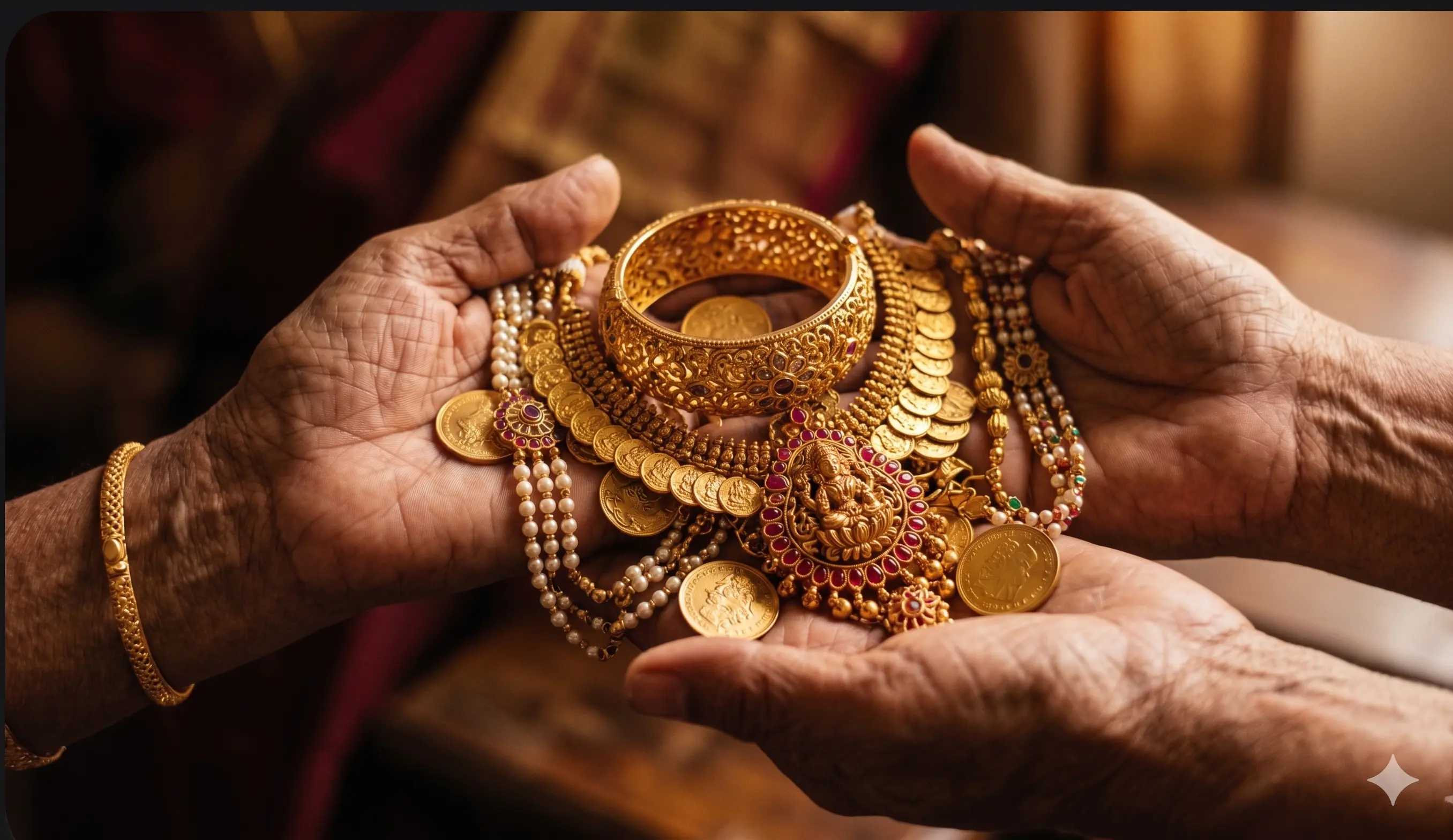
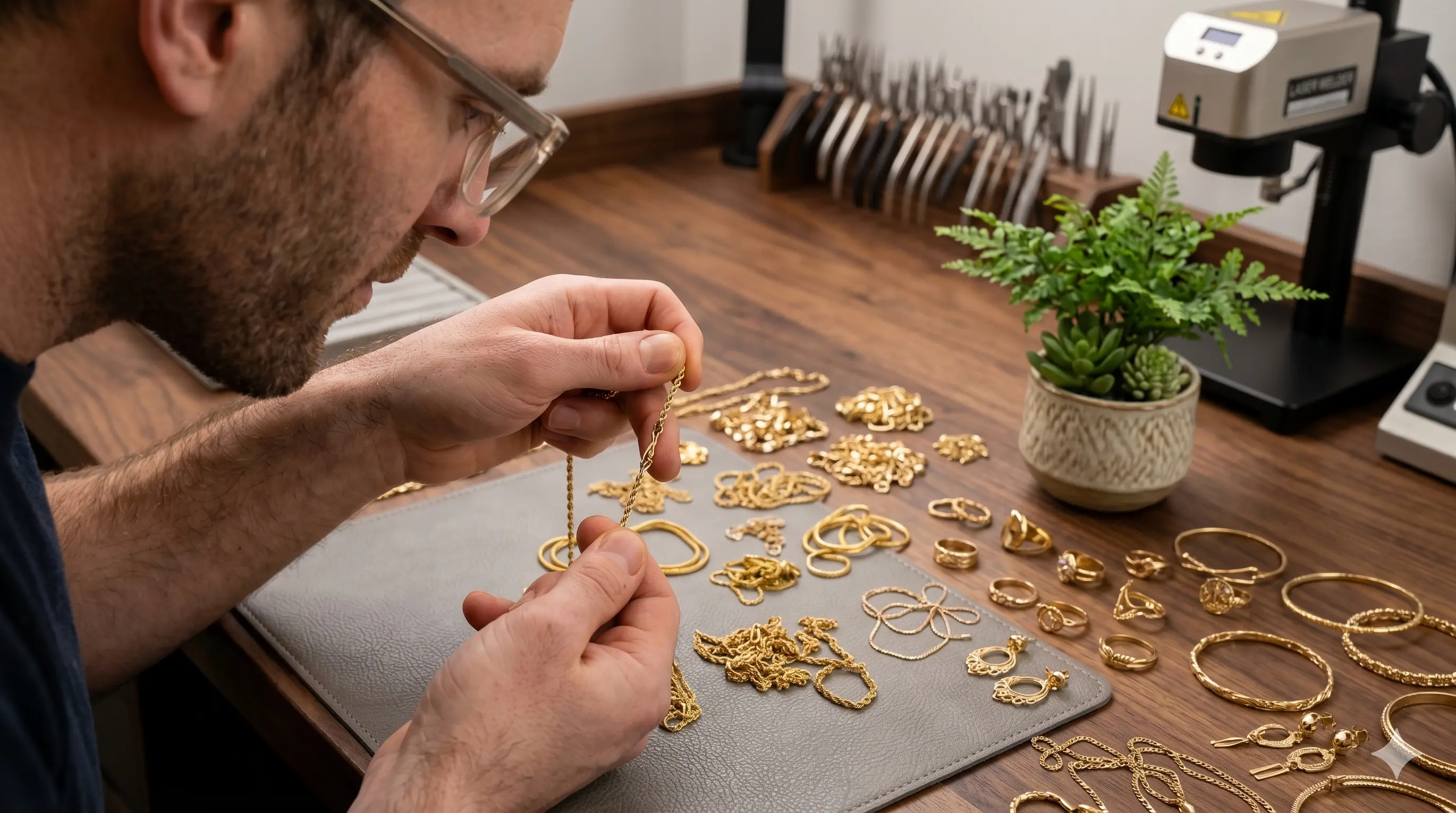
Every week we see jewellery walk through our doors that turns out to be gold-plated brass, gold-filled silver, or increasingly tungsten core wrapped in real gold leaf. The good news? Anyone with basic household tools can run five simple checks before they pay for, or accept, a piece they're unsure of.
1. Read the hallmark carefully
Sri Lankan jewellery is most often stamped 916 (22-karat, the local standard), 875 (21-karat) or 750 (18-karat). A genuine hallmark is small, crisp, and tucked into an inconspicuous spot — the inside of a ring, the back of a clasp, the underside of a pendant bail.
A word of caution: hallmarks can be — and are — forged. So treat the stamp as a starting point, not a verdict.
2. The magnet test
Real gold is non-magnetic. Hover a strong fridge magnet (the rare-earth kind from a hardware shop works best) close to the piece. If it tugs even slightly, the core is iron or a magnetic alloy and it isn't solid gold.
Note that this only catches the cheaper fakes. Brass and copper aren't magnetic either, so a clean magnet test on its own doesn't confirm authenticity — it just rules out one common forgery.
3. The water (density) test
Pure gold is extremely dense — about 19.3 grams per cubic centimetre, nearly twice the density of lead. Fill a measuring jug with water, note the level, drop the piece in, and check how much the water rises. Divide the weight of the piece (in grams) by the volume displaced (in millilitres). A result close to 19 points to high-purity gold; anything below 15 is suspect.
4. The acid test (handle with care)
Home gold-testing kits use nitric acid solutions of varying strengths. A small scratch on a black testing stone, a drop of acid, and the colour reaction tells you the karat range. Wear gloves, work over a tile, and never test a piece in a way that damages a visible surface.
This test is reliable for surface metal, but won't catch a clever gold-filled forgery where only the outer layer is real.
5. The ceramic streak test
Find an unglazed ceramic tile or the back of a bathroom tile. Drag the gold piece gently across the surface. Real gold leaves a soft gold-coloured streak. A black or grey streak means the piece is base metal with a thin gold coat.
When to stop guessing
These five checks will catch most of the fakes circulating in Sri Lanka's informal market. For anything serious — a wedding set, an inheritance piece, a high-value sale — bring it to a licensed buyer with XRF (X-ray fluorescence) testing equipment. It's non-destructive, takes under a minute, and tells you the exact karat composition.
At Ran Naya, every piece we evaluate is XRF-tested in front of you. You see the same screen we see.
Written by
Ran Naya Editorial Desk